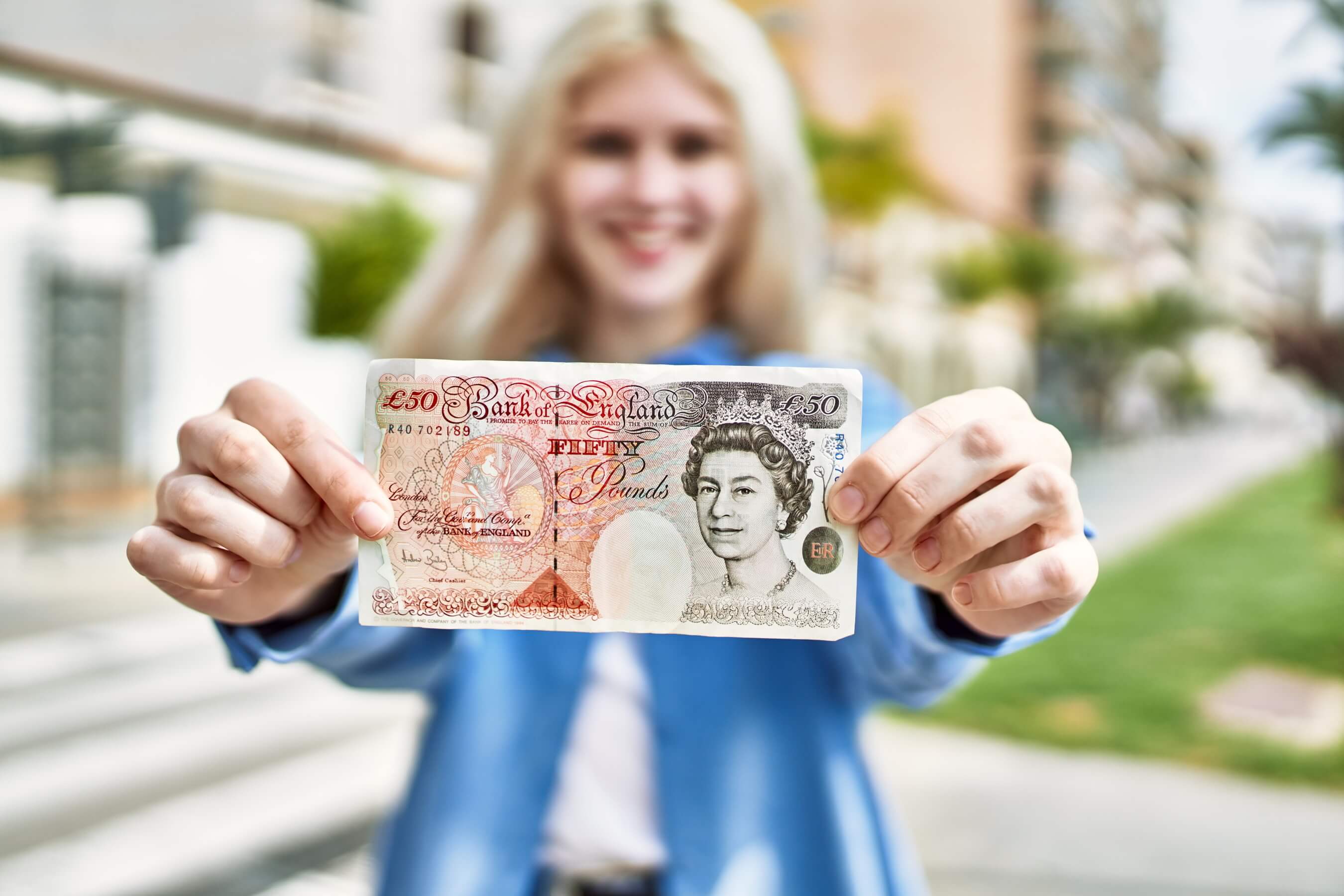
The British pound sterling — colloquially known as the pound, quid, bob, and countless other names — is thought to be the oldest currency still in circulation. This resilient currency has endured for over 1200 years, and remains the fourth most traded currency in the world behind the US dollar, the euro, and the Japanese yen.
The pound has had a bumpy ride in recent years marked by several notable declines, and American travelers can now enjoy a conversion rate more favorable to the dollar than it was through most of the 2000s and early 2010s.
Better still for American travelers, the British pound effectively unlocks four countries for the price of one: England, Scotland, Northern Ireland, and Wales.
Interested in learning more about this storied currency? Considering booking that trip to explore your ancestral roots? Read on.
Brief History of the British Pound

As mentioned, the British pound is the official legal tender for the entire United Kingdom, which encompasses England, Scotland, Northern Ireland, and Wales. Issued by the Bank of England, the pound takes its name from the measuring system once used to value its coins.
The historic strength of the pound can be traced back to the long history of the British Empire. Notable recent fluctuations include the economic fallout from the historic Brexit vote — which brought the pound to a 31-year low — and a disastrous 2022 budget proposal that rocked the pound’s value, bringing it briefly to near-parity with the US dollar.
Although the pound’s value has stabilized somewhat, its relatively weakened value makes this a good time to plan that long-awaited trip to the British Isles.
Traveling in the UK
With no language barriers and straightforward entry requirements, the UK is especially easy for American travelers to visit — though there is one new step to handle before you fly (more on that below). Be sure your passport has the usual six months of extra validity recommended for international travel.
Once there, travelers have a vibrant culture to explore, and an extraordinary train network to facilitate their journey. Whether it’s the bustle of London — the most visited city in Europe, and one of the museum capitals of the world — the world-famous wonder of Stonehenge, or the countless castles dating back thousands of years, the UK has an enormous amount to offer.
Before Your Trip

Get your ETA. Americans no longer need a visa for UK travel, but as of 2026 you will need an Electronic Travel Authorisation before boarding. It costs £20, covers unlimited trips for two years, and most applications are approved within minutes through the UK ETA app (though it’s wise to allow a few days).
Plan your currency ahead. Although the UK has become increasingly cashless, arriving at your destination with at least some local currency pocket money is a no-brainer — particularly if you’re bound for a more rural area. Given the exorbitant exchange rates applied in airport kiosks, the general rule of thumb is: the farther from the airport you acquire your pounds, the better. While some US banks will allow you to exchange dollars to pounds for free, others charge a fee under a certain minimum, and others won’t offer the exchange service at all.
How we can help. If your local bank doesn’t offer a pound exchange service, or if you prefer the convenience and privacy of our direct-to-your-door exchange service, consider acquiring some pounds with us before your trip. You can order all the pounds required for your travels in a number of denominations, including a next-day shipping option if you’re in a hurry. When FedEx arrives, you simply hand them a check in exchange for your currency and you’re ready to travel — no trips to the bank, and no highly visible acquisition of money at an airport kiosk.
Don't Wait: Buy British Pounds Now
During Your Trip

Armed with some cash, it’s worth thinking about how you will be spending money throughout your UK trip.
While a credit or debit card can be a good option, spending abroad with the right card is key. It is not uncommon for certain cards to charge a pesky foreign transaction fee, generally ranging from 1% to 5% of your purchase total. It’s well worth your time to check the fine print of your cards before using them abroad.
By contrast, credit cards geared toward travelers will tend to waive foreign transaction fees while simultaneously offering special rewards for travelers. Credit cards also generally offer better fraud protection than debit cards, which is a worthwhile security consideration when spending money abroad.
Contactless payments now cover virtually everything in the UK, and American cards generally work without issue. But American travelers should be especially aware that many kiosks, parking terminals, and other unattended machines require a 4-digit PIN that most American credit cards don’t have (not to be confused with your card’s security code, which is a separate feature). Bringing a debit card, which does carry a usable PIN, or having cash ready are both good fallbacks.
As in the US, you may also encounter credit card minimum fees, which is another good reason to be carrying at least some cash. And while you may be able to easily acquire more pounds via an ATM, be aware that currency conversion fees can apply here, as well.
After Your Trip
Upon your return to the US, you can easily sell your remaining currency back to us without needing to wait in line at a bank. Simply enter your transaction on our website, and we’ll send you a printable label that you can package and drop off at any FedEx location. One day after we receive your pounds, you will receive a deposit in your bank account of choice, or a check in your hands via FedEx delivery.
Here’s to a great UK trip.
Key Takeaways
- Americans require a special, but simple authorization before traveling to the UK. The Electronic Travel Authorisation costs £20, covers two years of unlimited trips, and is usually approved within minutes.
- One currency covers four countries. Travelers can explore England, Scotland, Wales, and Northern Ireland without switching currencies.
- Contactless works virtually everywhere, but unattended machines may require a PIN. Bringing a debit card or some cash covers the gap.
- Check your card for foreign transaction fees before you travel. These typically run 1-5% of each purchase and add up quickly.