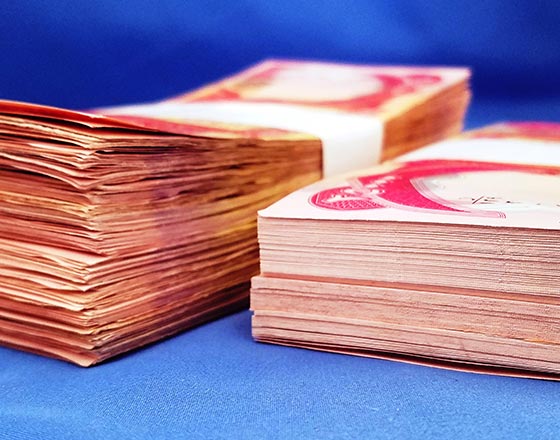
 Circulated (left) and Uncirculated 25k IQD Notes
Two questions come up more than any others when customers are deciding what to order: should I buy circulated or uncirculated notes, and which denomination makes the most sense?
In short, the answer to depends on what you plan to do with the currency. Here's how we think about it, and what drives the price difference.
Circulated or Uncirculated: A Brief Primer
All notes carry identical spending power. An uncirculated note and a circulated note of the same denomination are worth exactly the same amount. A 25,000-dinar note is 25,000 dinar whether it came off the press last month or has passed through countless hands. Condition affects what an exchange charges to source and ship a note, but it doesn't change what that note is worth as currency.
Circulated doesn't mean damaged. Circulated notes may show creasing or wear from normal use, including light folds, worn edges, or occasional writing. What they won't have is rips, tears, or damage that would render a note unusable. Every note SafeDinar.com sells meets that standard, and notes that don't get returned to the seller. You can review our full grading criteria on our note quality page.
Uncirculated notes are about presentation, not value. People choose uncirculated for specific reasons: a note intended as a gift, a note that will be framed or displayed, or simply a personal preference for pristine condition. Those are all legitimate reasons to pay a premium, but greater spending power is not among them.
Why We Charge More for Uncirculated Notes
Simply put, uncirculated currency costs us more to acquire. Additionally, keeping notes in pristine condition through handling and shipping entails additional costs. These are the only reasons that uncirculated notes are more expensive to order via a currency exchange.
Selling Back Uncirculated Notes
There is currently a market for uncirculated Iraqi dinar, so we pay a small premium when buying back notes in pristine condition. To qualify, notes must meet the same grading standards we apply when buying. This is subject to change in the future.
Choosing a Denomination
A larger denomination isn't "better" than a smaller one. Each note is worth its face value, so there's no advantage to buying larger bills or smaller ones from a value standpoint.
Match your denominations to how you'll use the currency. Smaller denominations are practical for incidental spending while traveling. Larger denominations are simpler for larger transactions and are easier to store. Feel free to order a mix of denominations to fit your situation (we try to keep a full range in stock).
Questions About Your Currency?
Every situation is a little different, and we're happy to talk through yours. If you have questions about the condition or denomination of currency you're holding, reach us by phone at 877-723-3391, by email at info@safedinar.com, or through our chat in the bottom right corner of your screen.
When you're ready, you can buy Iraqi dinar in the denominations and condition you prefer, or sell dinar back to us at any time.
Key Takeaways
- Circulated and uncirculated notes have identical spending power. Condition affects presentation and price, but not what the currency is worth.
- Uncirculated notes cost more because they cost more to source and handle. The difference reflects acquisition and shipping, not a difference in value.
- No denomination offers an inherent advantage over another. Choose based on how you plan to spend.