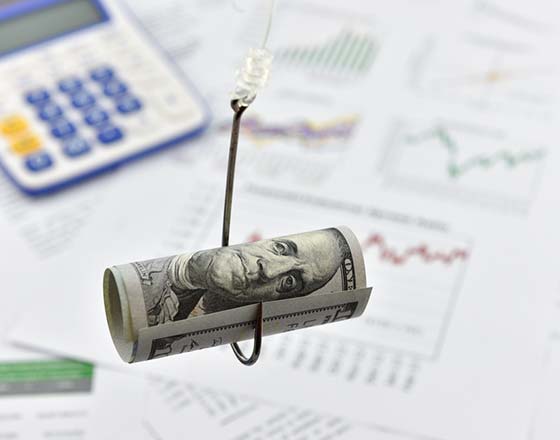

The currency exchange industry has seen its share of upheaval, with federal fraud cases shutting down some of the biggest names in the business.
One consequence is confusion among customers over whom to trust. The dealers that remain range from long-established exchanges with decades of regulatory history to operations that appeared last year, and the difference isn't always obvious from a website.
The good news is that most of what separates a legitimate exchange from a questionable one is a matter of public record. You don't need to take anyone's word for it, including ours. Here are nine things worth verifying before you place an order.
1) How Did I Get Here?
The most important question to ask before proceeding with a transaction is: How did I get here? What is prompting me to make this transaction, and how did that lead me to this specific website?
Be leery of websites or blogs where purported "experts" speak of "inside knowledge." These websites often have links to official-looking websites that appear to substantiate their claims. Sometimes these sites link to "news stories" from seemingly credible sources that create the illusion of betraying inside information. Scammers often recommend a particular exchange to make the transaction. In many instances, these parties are connected.
It is easy to compare rates across exchanges yourself, and we strongly recommend you do so before accepting the advice of a rumor peddler who may be colluding with an exchange. You can read more about this type of scam and others in our dedicated article on the subject.
2) What Services Do They Offer?
A true currency exchange buys and sells bank notes, period. Dealers offering currency on reserve, option contracts, or layaway aren't selling you currency at all. They're selling a financial product, which falls under an entirely different and much stricter set of regulations.
Those dealers should be able to produce a brokerage license, which is a separate credential from the ones governing currency exchanges. If they can't, they're operating outside the law.
3) Are They Federally Registered?
To exchange currency legally in the US, a dealer must register with FinCEN, the Treasury body that enforces anti-money-laundering law. This isn't a formality: registration puts a business under federal recordkeeping and reporting obligations, and those obligations exist to make it harder for criminals to move money through legitimate channels. It's the same body of law that governs the formal banking system.
What does that mean for you as a customer? A registered exchange has to verify who it does business with, keep records of every transaction, and answer to federal examiners. There's a paper trail, and there's an entity with a license to lose. An unregistered dealer offers neither.
Go ahead and search the FinCEN registry yourself for your dealer of choice. If they aren't in it, and you're searching by the entity's official legal name (Dartmouth Capital, LLC is ours), then you likely aren't dealing with a legitimate exchange.
4) Are They Registered With the Better Business Bureau?
While not required, reputable currency exchanges should be accredited by the BBB.
100 years before Yelp, the BBB began as a service to safeguard individual consumers from irresponsible businesses. Their rating system is still the gold standard among legitimate business-to-consumer companies, functioning as a 3rd-party verification service that the business is who they advertise themselves to be.
If a dealer is not registered with the BBB, they may not be who they claim to be.
5) Are Rates Calculated and Tracked Transparently?
Reputable dealers practice complete transparency with their rates. If a dealer claims to offer amazing rates but is not forthright about what those rates will be on the date of your transaction, that is serious cause for concern.
Consider the following hypothetical: The exchange rate for euro to USD is 2:1 on the day you make your transaction. But two days later, the exchange rate drops to 1:1. Obviously, it makes a great deal of difference which rate is applied to your transaction. Yet many currency exchanges don't actually "lock in" the rate you receive on the day you place your order.
When receiving a quote, read the attached disclaimers carefully. Otherwise, you may not get the rate you hoped.
6) Are You Required to Sign an NDA or Safekeeping Receipt?
If a dealer forces you to sign a non-disclosure agreement (NDA) or safekeeping receipt (SKR), there is a high probability you are walking into a scam.
NDAs and SKRs have been used by scammers to trick customers into relinquishing their power of attorney, prevent them from accessing their currency, and other shady tactics. Federal courts have documented these schemes in detail. These are all flagrant red flags which any reputable currency dealer would avoid.
7) Does the Dealer Only Exchange Specific Types of Notes?
Bogus claims have surfaced over the years insisting that only the post-2014 dinar currency was valid, or that the currency needed to be associated with a specific RFID.
Currency is a bearer instrument, meaning that whoever has them is the owner. Therefore, a legitimate currency exchange won't care where you bought your currency, only that it is authentic legal tender issued from the central bank of the country in question.
8) Has the Company's Message Changed?
Archive.org's WayBack Machine search engine can be highly revealing. Not so long ago, certain popular currency exchanges offered investment advice directly on their websites, in flagrant violation of the laws governing legitimate exchanges. Other sites are simply not as old as they claim to be.
Whatever you discover, this is a great tool for gathering information on the exchange and determining how consistent they have been with their message over time.
9) Who Owns the Exchange?
The currency exchange industry has seen a large amount of divestment and consolidation in recent years, resulting in many separately marketed brands under ownership of the same company.
Ownership information should be clear on the dealer website, and may also be located on their BBB page. You may be surprised to discover that your dealer is not exactly who they present themselves to be.
Still Hesitant?
Think you have found a reputable dealer, but hesitant to make a big transaction? Try a small one. There's generally little cost in doing so other than a small pass-through charge for shipping. This is a great strategy to minimize risk when dealing with a currency exchange for the first time.
Does your dealer pass all 9 tests? If so, congratulations: you are very likely working with a legitimate currency exchange. Unfortunately, it is all too easy to find currency exchanges that do not meet these criteria. Think twice before entrusting them with your hard-earned money.
Ready to put this into practice? Give us a try: SafeDinar.com has been in the currency exchange business since 2004, continuously owned and operated by Bryan Canavan through Dartmouth Capital, LLC. You can review our FinCEN registration, our BBB record, and 20,000+ unedited customer reviews. Have questions we haven't answered here? Reach us by phone, email, or chat.
When you're ready, you can buy currency from us in over 60 currencies, or sell your currency back at any time.
Key Takeaways
- Any legitimate US currency exchange must be registered with FinCEN. Search the registry by the company's legal name, which may differ from its trade name.
- A real currency exchange buys and sells banknotes, and nothing more. Dealers offering reserves, options, or layaway plans are selling a financial product they're most likely not licensed to sell.
- Being asked to sign an NDA or safekeeping receipt is a red flag. Scammers use these documents to limit your recourse and your access to your own money.
- Check how a dealer presents themselves over time. The WayBack Machine can reveal investment advice or claims a legitimate exchange would never make.